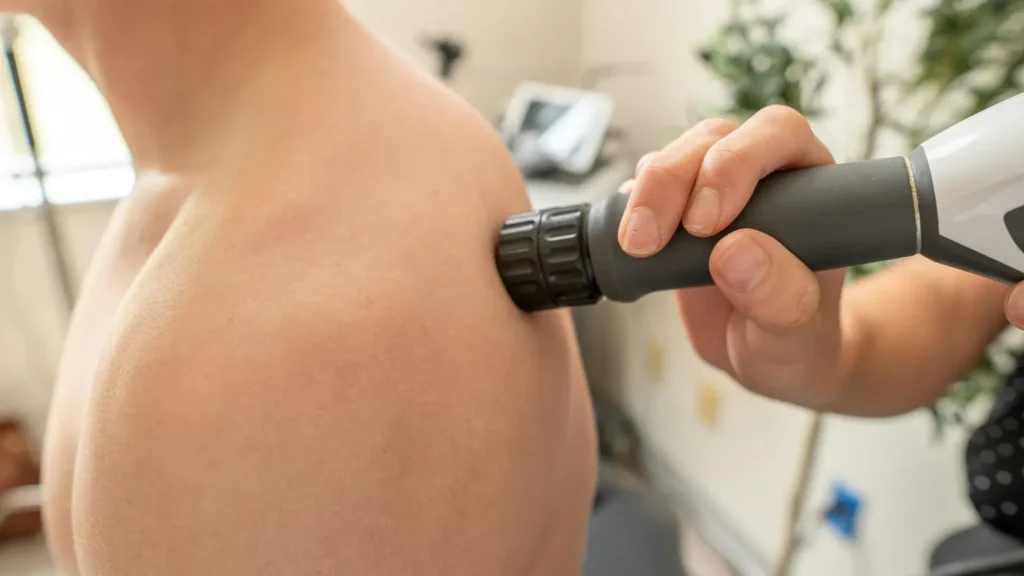
Shoulder impingement, also widely known as subacromial impingement syndrome, is a common condition that causes significant pain at the front and side of the shoulder. This happens when the tendons of the rotator cuff or the subacromial bursa (a fluid-filled sac that reduces friction) become pinched or compressed as they slide through a narrow passageway. This compression occurs under the acromion, the bony prominence at the highest point of the shoulder blade, often causing intense pain when lifting the arm overhead or reaching behind the back.
This condition frequently arises from overuse, repetitive overhead motions (such as swimming, throwing, or painting), or anatomical structural variations. Non-surgical management is almost always the first line of defense, with a strong focus on activity modification, physical therapy to strengthen the stabilizing muscles, and potentially a corticosteroid injection to reduce inflammation. If symptoms persist for months despite these treatments, surgical options like subacromial decompression are explored to create more space in the shoulder joint by removing inflamed tissue or shaving down a hook-shaped acromion.